
RUU vs usage-based AI voice
Flat monthly AI voice, without per-minute anxiety.
Usage-based AI voice platforms can be useful for testing, prototyping, and technical teams. RUU is built for businesses that want call handling managed for them with setup, phone workflow, dashboard visibility, recordings, transcripts, workflow review, and ongoing management inside a predictable monthly service.

Cost stack
The monthly cost is not always just the voice minutes.
Usage-based platforms may be a strong fit for builders. Businesses sending real customer calls through an AI system often need clearer planning around volume, setup, monitoring, and ownership.
Call duration can scale with real customer conversations.
Phone numbers, routing, and provider usage can add complexity.
Recordings, transcripts, summaries, and storage may depend on setup.
Actions, integrations, and maintenance can affect total effort.
Included monthly service
RUU combines the agent, workflow, dashboard, and management into one service.

01
Managed AI call workflow
Inbound answering, outbound follow-up, routing, review, and outcome tracking can work together inside the approved setup.
Business-specific setup
Call goals, scripts, handoff rules, and workflow behavior are reviewed before production activation.
Dashboard outcomes
Approved workflows can show recordings, transcripts, summaries, call outcomes, callback needs, and review notes.
AI Receptionist
AI Calling Agent
Phone workflow
Recordings
Transcripts
Human handoff
Workflow review
Ongoing management
Area
Usage-based AI voice platforms
RUU
Billing
Often minutes, actions, add-ons, or provider usage.
Flat monthly managed plans.
Setup
Customer or technical team configures the system.
Managed setup and workflow review.
Phone workflow
Often connected and maintained separately.
Included inside the managed call workflow.
Records
Recordings and transcripts may depend on configuration.
Available in approved workflows.
Dashboard
May require custom setup or additional tooling.
Included for call visibility.
Maintenance
Customer or technical team owns ongoing operation.
Ongoing managed service.
When usage-based tools fit
Usage-based platforms can be a strong choice when your team wants to build.
Developer-first AI voice tools can be powerful for teams that want low-level control, custom architecture, internal telephony expertise, and the responsibility of running the voice stack themselves.
Compare DIY vs managed
Good fit when
Technical team owns the stack
- Developers available
- Low-level control needed
- Prototype or internal build
- Custom telephony plan
- In-house maintenance
Scenario planning
Real call volume needs real planning.
A realistic comparison includes more than minutes: call volume, call duration, recordings, transcripts, workflow complexity, integrations, and internal management effort.

Compare more than minutes.
Scenario estimates depend on provider pricing, telecom setup, call volume, workflow configuration, implementation needs, and the operational time needed to maintain the system.

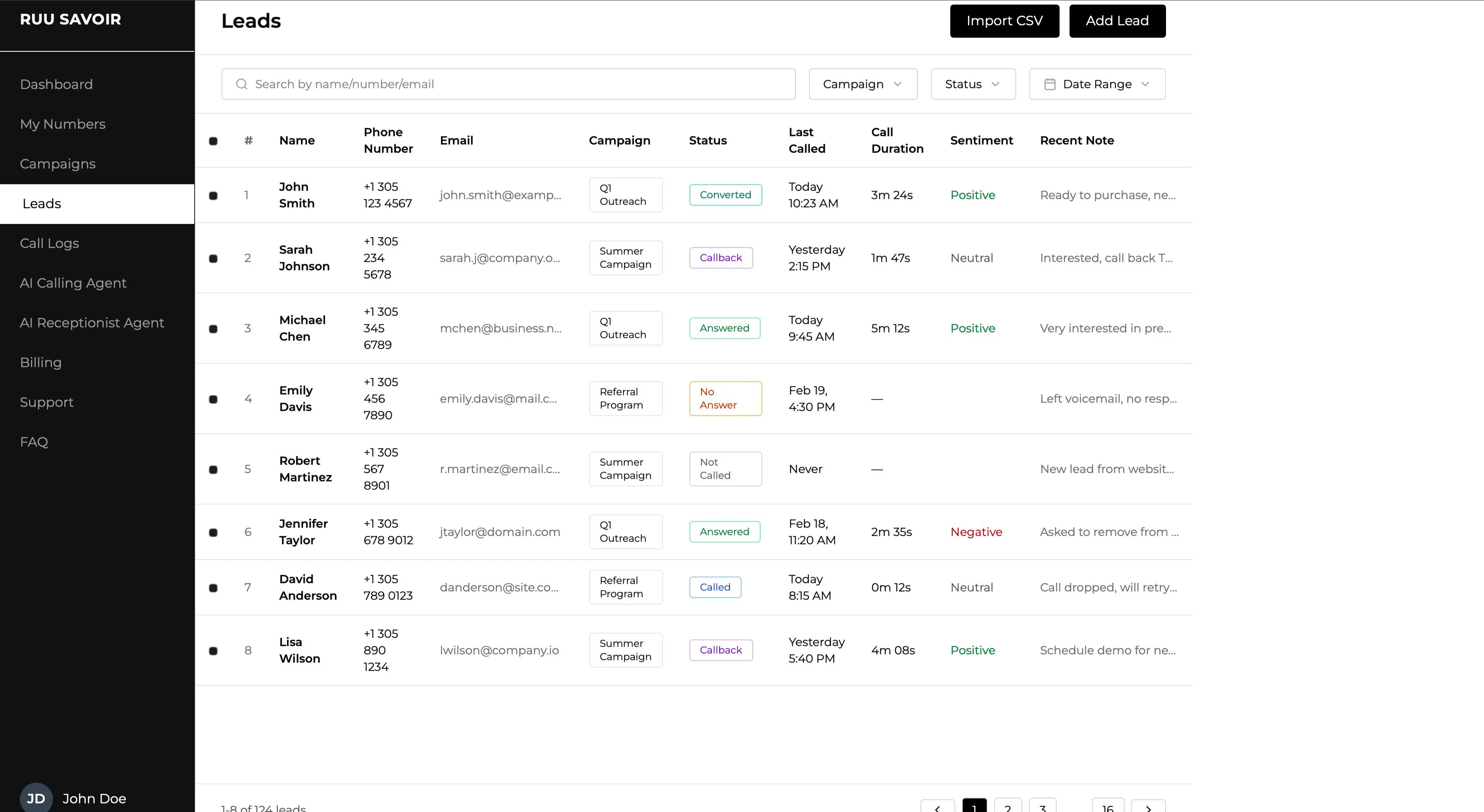
Dashboard visibility
Every approved workflow can produce visible call outcomes.
Recording
Transcript
Caller intent
Outcome status
Follow-up needed
Human handoff flag
Campaign result
Callback note
Explore Demo Dashboard
Decision guide
Choose based on what your team wants to own.
The best choice depends on whether your team wants to build and maintain the system, or use a managed AI call workflow with predictable monthly planning.
Choose usage-based platforms if
You want to build, have technical resources, need low-level control, and are testing or prototyping your own voice system.
Choose RUU if
You want managed setup, dashboard-visible outcomes, recordings, transcripts, handoff, and flat monthly planning.
Choose RUU when maintenance matters
Your team does not want to own telephony, prompts, workflow logic, call records, and ongoing voice-stack management internally.
Start with demo access
Review sample workflows and dashboard outputs before requesting live production activation.
FAQ
Questions businesses ask before choosing a pricing model.
Are usage-based AI voice platforms bad?
No. They can be powerful for technical teams, builders, custom voice products, and teams that want to manage their own stack.
Why does RUU use flat monthly pricing?
RUU is built for businesses that want predictable planning around real call workflows, not surprise usage anxiety.
Does RUU include recordings and transcripts?
Approved workflows can include recordings, transcripts, summaries, outcomes, and dashboard visibility where enabled.
Is RUU live immediately after signup?
No. Demo access comes first. Live business-specific calling starts after workflow review, plan selection, verification, and production activation.
Can RUU complement my existing tools?
Yes. RUU can complement CRM, ecommerce, calendar, support, and business workflows where applicable.
Who should choose RUU instead?
Businesses that want managed AI call handling without owning telephony, prompts, recordings, dashboards, workflow logic, and maintenance internally.
Demo-first comparison
Compare the pricing model. Then explore the workflow in demo mode.
See how RUU handles call workflows, recordings, transcripts, outcomes, and handoff before requesting live production activation.